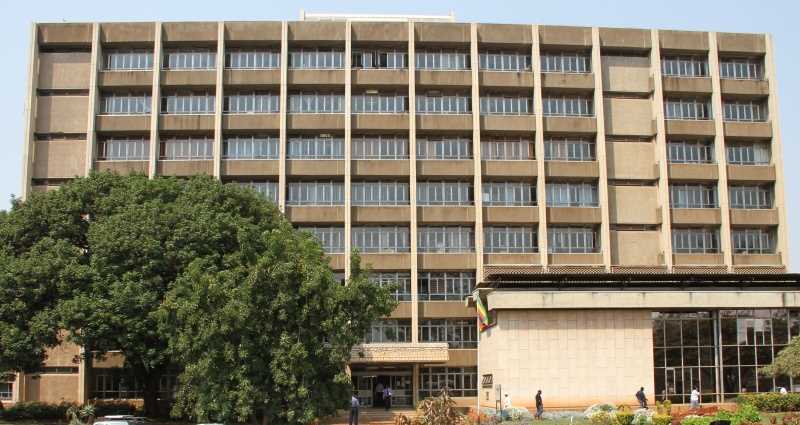
City Health Department
Headquartered at Rowan Martin Building (RMB) — Rowan Martin Building, Samora Machel Avenue, Milton Park, Harare, Harare Province, 04-263, Zimbabwe
Overview & Mandate
General operations and functions of City Health Department
The Health Services Department is headed by Dr Prosper Chonzi. His office is at Rowan Martin Building. The Health Services Department is charged with the responsibility of providing Primary Health Care services to the residents of Harare and ensuring the general health of residents. With its Head Offices situated at Rowan Martin Building (RMB) and its major services provided at two Infectious Disease Hospitals (Wilkins and Beatrice Road Infectious Disease) and a network of clinics that span the whole city. The department's growth or formation is traceable to 1915 when it was known as the Sanitary Department with a thrust on the control of flies and mosquitoes.
Vision
The City Health Services Department to provide WORLD CLASS PRIMARY HEALTH CARE SERVICES by 2025.
Mission
To provide world class primary health care services through the provision of comprehensive health services, education and promotion of good health, environmental health management, curative and rehabilitative care targeted at the most health vulnerable residents of Harare.
Core Values
The department will be driven by the following core values:
- Truthfulness
- Respect
- Teamwork
- Commitment
- Communication
- Innovation
Strategic Focus
Strategic focus is the ability of an organisation to harness and direct all resources in one chosen direction. In order to achieve the vision as stated above, the department will focus or start moving in the following strategic direction.
Strengthening and Capacitating Districts
Service delivery in the department is hinged at district level and the department believes that it will leverage and maximize the health impact of various programmes if it capacitates the districts.
Quality Assurance
The department will only become world class when it provides a quality service. The department plans to match and exceed international quality standards. It will seek to ISO certify most of its procedures and practices and all sections will be encouraged to benchmark with the best. The department will require, as a minimum, all sections to have standard operating procedures.
Mainstreaming Child Health
The department will work towards a deliberate strategy aimed at achieving an Integrated Management of Childhood Illnesses (IMCI). Already the opening of a paediatric opportunistic infection clinic at Beatrice Road Infectious Diseases hospital is a first step towards a child HIV/AIDS health care service that will be rolled out to all the clinics.
The HIV/AIDS Challenge
HIV/AIDS is the biggest health challenge facing the country and the city. It is the single biggest direct and indirect cause of morbidity and mortality. HIV/AIDS is also an important factor in almost all health programmes and this plan recognises the importance of a integrated approach.
Priority Health Issues
The department recognises that the city is facing numerous environmental challenges and that the city is sitting on numerous public health time bombs. Priority will therefore be given to strengthening the disease surveillance and epidemic preparedness and response capacity of the department and the city. The strategic plan also recognises the need to intervene to address the high morbidity and mortality due to cardiovascular diseases and malignancies, the need for more effective management of these conditions in a district hospital set up, the need for secondary level of care (district hospitals), the need to have a viable programme or mentally ill patients and the need to keep malaria out of Harare.
Access to Essential Drugs
Access to health would be meaningless if patients leave the health institution without the requisite drugs. This plan recognises the importance of ensuring and sustaining 100% availability of vital drugs and 80% essential drugs in all the computerised stock management system.
Organisational Development an Transformation
The successful implementation of this plan presupposes that the department fundamentally changes or transforms the way it transacts business with particular thrust on the following:
- Every employee should do what he or she is expected to do.
- The department needs to clearly define the city health way of doing things.
- The department will work like clockwork and do the right things right at the right time and work with surgical precision in all its operations.
- There are several skills or core competencies that the department has mastered over time. There is need to deliberately work on developing these organisational capabilities.
Infrastructure Development
The department envisages the expansion of the city's health infrastructure in the next five years to address the "new health demands". This development will address the following areas:
- Address the new health demands of the low and medium density suburbs through the conversion of the Family Health Services to Satellite Clinics.
- The health care needs of the Central Business District (CBD) through the provision of a Satellite and Maternity health care service in the CBD.
- The refurbishment of existing infrastructure and equipment.
The department has:-
- 12 polyclinics – (three clinics in one with Maternity Unit, Primary Care Clinic and Family Health Services Clinic). These are located predominantly in the high density areas.
- Seven Primary Care Clinics
- 15 satellite clinics. These will soon be 16 with the opening of Budiriro Phase 5 Clinic.
- Six Family Health Service Clinics
- Four Dental Clinics.Gershon Dental at BRIDH is the largest and the rest are located within the polyclinics. Ideally each polyclinic should have a Dental Unit.
- Two Infectious Diseases Hospitals. Beatrice Road and Wilkins Hospital.
Two specialist services:
- Medical Examination Centre which is critical diagnosis and treatment of communicable diseases. The City intends to take over the issuing of Food Handlers Certificates and this will be performed at MEC.
- Genito-Urinary Centre – an ideal clinic for the treatment of Sexually Transmitted Infections. We have recently opened a Cervical Cancer Screening Clinic here.
Strengthen The Utilisation of The Health Service Fund
Experience in the public sector has shown that retention and use of user fees at local level enhances the effectiveness of the health system. The city has a policy where it retains clinic fees for emergence and essential requirements. This policy has worked very well to ensure that the clinics and hospitals are kept functional. In fact it is partially through such policy that the city health service delivery remained functional when other services in other departments had grind to a halt in the past few years. However lately there has been a policy reversal.
Cooperating Partners Policy and Role
There is a renewed interest in health by various development partners. The department welcomes cooperating partners. Efficient coordination of the efforts of the various partners is important in ensuring optimal use resources. The entry and exit point for all partners in the department is the Director of Health Services' offices in Rowan Martin Building (RMB). Partners are expected to work within the department's vision and mission and the parameters set out in this strategic focus. Partners will operate with express written approval or Memorandum of Understanding from the department. The department will establish a one stop shop office under the Director of Health Services that will handle timeously all issues to do with partners. The department has identified several project and programmes it is working with partners and would want to further develop this partnership. These are include and are not limited to the following:
- Supply, procurement and distribution of drugs, vaccines and other medical sundries.
- Research and development.
- Health promotion, preventive health services, epidemic preparedness and response.
- STI/HIV/AIDS/TB prevention and treatment.
- Utilisation of Training Facilities at the Genito Urinary Center for STI and other health issues.
- Procurement and distribution of nutrition products and programmes.
- Procurement of equipment and other hospital/clinic supplies.
- Human resource development and organisational development programmes.
- Completion of buildings in Kuwadzana phase five clinics, Budiriro phase four clinic and Wilkins Hospital wards.
- Expanding and diversifying the service provisions at all council clinics especially those in the low and medium density suburbs.
- Setting up a mobile health service.
- Development of a Central Business District health service.
- Utilisation of excess capacity at the city health institutions.
Complimentary Role of The Private Health Sector
A Significant proportion of Harare resident access private health care. The city has a fairly developed private healthcare industry that currently complements the public health sector. However, this industry has been largely self-regulating and over time the industry structure has developed some monopolistic an oligopolistic tendencies and allegations of profiteering have been made. While the department recognises the important role of the private health sector in the provision of health services in the city, the City Health Department as the health planning authority in the city, needs to work closely with the Ministry of Health and Child Welfare to regulate and ensure an efficient private health care industry.
Environmental Health Services
The Division is located at Rowan Martin Building (RMB) and it is headed by Mrs Ruby F. Tapera.
Functions/Objectives of The Division
- Issuing health registration or license certificates to the business community.
- Preventing, responding and controlling epidemics.
- Increasing access to safe water and sanitation.
- Controlling pests and vectors.
- Ensuring food safety.
The harsh socio-economic environment experienced in the country in the past ten years adversely affected the health operating environment. From the samples taken on the municipal water in 2009, all the reports show that the water is satisfactory although due to problems like pipe bursts and the risk of contamination in the water network, it would be difficult to generalize.
The samples taken on borehole water in Harare so far have shown satisfactory results although we are not in a position to generalize on all borehole water. The policy on borehole water is that each particular borehole water should be tested. The biggest challenge has been in the high density areas where in the absence of municipal water, the residents rely on unprotected wells.
The city boasts of a very cooperative and compliant business community and this has been shown by their willingness, with minimum force, to license their premises. In 2007 department issued 25 863 health registration certificates and in 2008 the figure had dropped to 19 487, attributable to the worsening economic environment. The department can build on these standards and culture to promote a world class health business environment.
The city experiences high pollution levels and this is attributable to both lax pollution regulations and poor enforcement capacity. The city has also witnessed an increase in industrial activities in the residential areas, resulting in increased levels of air, land and water pollution.
Cholera
The city experienced its worst cholera outbreak in 2008/9 and this was caused mainly by the erratic supply of water and sewerage blockages in most residential suburbs and Budiriro high density suburb was the worst affected. A total of 17132 patients were treated at the cholera treatment centres that were set up at Budiriro and Beatrice Road Hospital and there were a total of 495 cholera deaths.
The 2008/9 cholera epidemic was protracted and was severe because the health delivery system was also facing numerous challenges that included the critical shortage of health professionals and basic health support requirements like drugs, transport, protective clothing and materials. As long as the city faces erratic supply of water, uncontrolled sewerage blockages, uncollected refuse, unplanned settlements without the requisite supporting infrastructure, the city will always face a looming cholera threat.
Typhoid
The City experienced a Typhoid outbreak beginning October 2011 in Dzivaresekwa high density residential area. The outbreak later spread to other suburbs such as Warren Park, Kuwadzana, Mufakose, Mabelreign and the peri urban area of Granary. The total number of cases treated as in-patients or out-patients was 1 175 and of these 26 were confirmed as Salmonella typhi by the laboratory. No deaths were reported. The probable source of infection was identified as contaminated shallow wells in the area. The lack of provision of adequate potable water and sanitation is a disease time bomb, the bomb exploded with devastating effects.
Malaria
Malaria is a leading cause of morbidity and mortality in Zimbabwe. Malaria transmission and distribution in the country is mainly influenced by altitude. According to the national malaria stratification, Harare city lies in a malaria free zone. Current entomological and epidemiological evidence has confirmed this status for the city. Accordingly, confirmed malaria cases seen and treated in Harare are imported. Harare should accordingly plan to protect the malaria free zone status.
Most Harare residents have not been exposed to malaria infections before, therefore have zero immunity to the disease. With this level of immunity, if malaria infection were to occur in Harare, the consequences would be disastrous. The malaria threat for Harare is real. There is therefore need to strengthen existing strategies which are designed to detect and prevent incipient malaria transmission in the city. The deterioration in environmental conditions in Harare as highlighted above has meant that Harare is currently always at risk of major outbreaks – in fact from a public health perspective, the city is sitting on a health time bomb.
Epidermiology and Disease Control
Epidemiology and Disease Control (EDC) Division
The Epidemiology and Disease Control (EDC) division is headed by Dr KPE Masunda and is situated at Rowan Martin Building (RMB), 6th Floor. The EDC division works to protect the residents of Harare (and Zimbabwe) from health, safety and security threats whether local, national, regional or global. Whether diseases start at home or abroad, are chronic or acute, curable or preventable, human error or deliberate attack, the division fights disease and supports communities and citizens to do the same.
Core Functions of the Division
- Detecting outbreaks or epidemics at an early stage in order to be able to timeously and effectively respond to them, or to anticipate imminent outbreaks or epidemics by investigation, research and analysis of data
- Coordination of Outbreak and disease control response
- Detecting and responding to new and emerging health threats
- Tackling the biggest health problems causing death and disability
- Putting science and advanced technology into action to prevent disease
- Promoting healthy and safe behaviors, communities and environment
- Developing leaders and training the public health workforce, including disease detectives
- Taking the health pulse of Harare
Communicable Diseases
Tuberculosis (TB) - Objectives
- Increasing TB support and supervision.
- Increasing knowledge on TB tools and case management.
- Decentralising TB miscopy laboratory services to all polyclinics.
- Reducing TB among the high burden areas.
- Promoting operational research.
Tuberculosis was on the decline in the early 1980s but the trend changed with the advent of HIV/AIDS. The numbers in the City started to rise and around 2005 the trend stated to take a downward trend, in tandem with the HIV trend. The disease has affected the 20-50 age-group, which is the reproductively and economically productive.
The terrible duet is so inter-twined that nearly 100% of those TB patients who are admitted are HIV positive and 70-80% of those TB patients visiting the TB out patient department are HIV positive. The most common opportunistic infection among those with HIV is tuberculosis . Mortality and morbidity of HIV infected tuberculosis is higher and this puts a strain on the limited healthcare resources. Tuberculosis is the third highest commonest cause of death within the City. The TB programme which has been in existence for over thirty years is part and parcel of the National Tuberculos is Programme. The City adopted the DOTs and the STOP TB strategies to fight TB. It is the vision of the programme to reduce TB to a level where it is no longer of public health importance by 2025. TB should be non existent in the City by 2050. TB/HIV collaborative activities have now become an integral part of the TB program. The ideal is to have TB detected and treated among the HIV positive TB patients and HIV detected and treated among the TB patients.
The programme has relied on quality drugs supplied by the the NTP and there has been no interruption of supply in the last four years. Fixed Dose Combinations were introduced more than one and half years ago. There has however been a challenge in the supply of paediatric formulations. The City has a TB focal person who reports directly to the Director of
Health Services. Case detection is through quality assured microscopy. The City currently has one central laboratory which processes all specimens from all health institutions. Treatment is through the standardized short course therapy. Monitoring and evaluation is through cohort analysis annually. Drug resistance monitoring, that is, MDR/XDR has been non existent and operational research has been very minimal despite the abundance of data.
Challenges
- The TB programme has limited support and supervision.
- Knowledge gap in new TB tools and case management.
- Centralized TB laboratory services to the community.
- Centralised TB registration and initiation.
- There is need to reduce TB among the high burden areas.
- Limited Operational research.
- Poor data quality.
- Limited resources to deal with TB among the high burden areas.
- Limited TB/HIV collaborative activities.
- High TB/HIV co infection rate.
- Unknown number of cases of TB drug resistance.
HIV and AIDS - Objectives
- Reducing the impact of STI, HIV and AIDS on the individual, community and society.
- Preventing and controlling HIV and STI transmission.
- Providing access to treatment, care and psycho-social services for PLWHA.
- Monitoring and improving the quality of HIV care services at all sites.
- Promoting operational research and development.
- Implementing a holistic approach to HIV care.
HIV and AIDS remains a significant public health problem in Harare and is arguably the single most important health challenge facing the city. Given the national prevalence of HIV infection of 13.6% (source) and Harare urban population of 1 559 502 residents it is estimated that Harare urban has about 212 100 people who are living with HIV. It is also estimated that 42 420 people (20%) are in urgent need of antiretroviral therapy (ART). However it is also of note that the population that falls under Harare’s jurisdiction goes beyond just the residents of Harare. This brings an extra demand for opportunistic infections (OI) / ART services on Harare City Health department.
As at December 2009 there were 33 500 people registered in Harare City OI Clinics. Out of these 23 000 people were initiated on ART. As a proportion of those in urgent need of ART in Harare urban 54% are currently accessing ART. This then leaves a gap of at least 46% of ART demand among those in urgent need. Harare City Health department responded to the call by the Ministry of Health and Child Welfare to roll out ART services by establishing two initiating sites – Wilkins and Beatrice Road Hospital. These were established in 2004 and 2006 respectively. As the demand for OI/ART service increased the two initiating sites became congested. This resulted in the decentralization of ART follow up services to primary care clinics starting in 2005. Currently there are 15 clinics that are managing ART patients who are stable. Besides decongesting the initiating sites, decentralization has helped by bringing treatment closer to where patients stay thereby cutting down on transport costs for the patients. It has also been observed that that patient retention in care and adherence to treatment has also improved because of decentralization.
Several other services are important f or the holistic management of a patient living with HIV besides just the prescription of antiretroviral drugs. Holistic management would include counselling, nutritional support, screening of cancer, prevention of TB and prevention of STI. Counselling plays an important role. It is offered at varying levels, that is, before and after an HIV test, it is also offered continuously for psychosocial support and adherence as well as disclosure.
Nutrition is a critical component in the management of HIV infection. HIV infection does not only affect the nutritional status of the individual but of the family as well as it tends to rob families of their economically productive members.
Cervical cancer has been classified as an opportunistic cancer. Women with HIV infection have a higher risk of developing cervical cancer than those who are HIV negative. This then calls for an intensified cervical cancer screening program in HIV positive women who are accessing other OI/ART services in Harare City health facilities. It has been shown that HIV positive women develop cervical cancer faster than their negative counterparts hence the need for more frequent PAP smears.
Non Communicable Diseases - Objectives
- Developing district hospitals in Harare.
- Improving management for non communicable disease.
The burden of non communicable diseases in the city has not been properly quantified but is very significant and comparable to that caused by HIV/AIDS and TB. It consumes a lot of time of healthcare workers in terms of outpatient consultations. These diseases are increasing in number with even those with HIV/AIDS also equally affected.
The diseases in this category are hypertension, diabetes mellitus, cardiovascular disorders such as CCF and IHD, respiratory disorders such as asthma, chronic obstructive pulmonary disorders (emphysema, bronchitis) and pneumoconioses, as well as various musculoskeletal disorders and malignancies. These diseases have traditionally been taken care of by the central hospitals. However due to brain drain at these institutions, the special clinics that used to cater for this class of patients, have long since disappeared, with the consequent unintentional dumping of the affected patients to the city clinics, where neither the expertise nor the special drugs are avail able.
The City Health Department is therefore faced by the following challenges when it comes to dealing with non communicable disorders:
- An unquantified disease burden.
- Lack of diagnostic and monitoring expertise.
- Lack of monitoring equipment.
- Lack of appropriate drugs.
- Lack of standard case management guidelines.
- Lack of special chronic disease clinics in any of the districts.
- Lack of support and supervision in case management.
- Lack of a casualty or emergency treatment centre.
- Lack of district hospitals.
Health Services Administration
The Division is located at Rowan Martin Building (RMB) and it is headed by Mr R. Chigerwe.
Functions of The Division
- Refurbishing the existing infrastructure, equipment and furniture at all the hospital and clinics.
- Revamping the Communication Infrastructure Network.
- Developing an efficient transport and logistics system.
- Developing an efficient network of clinics/hospitals and complete unfinished projects.
- Developing sustainable health options.
- Ensuring efficient and effective Human Resource for Health.
- Effectively decentralising service provision to the districts.
- Strengthening health service planning management and leadership.
Infrastructure
The city has a well developed hospitals and clinics infrastructure. Inadequate capital investment in infrastructure development over the years resulted in most clinics and hospital buildings being in a serious state of disrepair characterised by serious plumbing problems, non functional toilets, poor water supply due to worn out pipes, non functional geysers, sewerage blockages, roof leaks, ceiling boards falling off, gutters and fascia boards falling apart, floor and wall tiles peeling off.
Development of Hospitals Infrastructure
The city has invested substantially in the upgrading of infrastructure at both Beatrice Road Infectious Diseases Hospital and Wilkins Infectious Diseases hospitals. Major outstanding works involve:
- The complete refurbishment of the wards.
- Replacement of the elevator at Beatrice Road.
- Construction of covered walk ways to link the wards and support sections at Beatrice Road.
- Construction of a bulk storeroom at Beatrice Road pharmacy.
- Construction of staff canteen at Wilkins and completion of the one at Beatrice Road.
Wilkins Hospital Uncompleted Wards
More than ten years ago the city started the upgrading of hospital bed capacity at Wilkins through the construction of a three storey ward at Wilkins. Unfortunately the City ran out of funds when the building was 70% complete. The city seeks partners to complete the wards.
Development of Clinic Infrastructure
The department has a wide network of clinics covering the whole city. This network grew over years through construction of new clinics, renovation of old buildings acquisition of residential properties. Council has been able to construct well designed clinics in the high density areas, but in the low and medium density suburbs, the clinics are still improvised structures, usually residential houses, providing a limited range of services, mainly Family Health Services.
There is need to upgrade most of the Family Health Services to satellite clinics, construct maternity clinics in the low density suburbs and the Central Business District, construct a new clinic in the Hopley area and to refurbish all the existing
poly clinics.
Communication, Technology and Health Information
Efficient delivery of Health services depend a lot on a reliable communication system. The fixed telephone service at 80% of the clinics is non functional. Communication with both hospitals and with Head Office is a nightmare due to aged switchboards which are broken down most of the time. The department has few computer hardware especially at Head Office and at a few clinics. Most of the computers at head office are networked and we still need to encourage more communication at Head Office.
However the computers in the clinics and hospitals are not networked. The city needs to network al l the computers at the clinics if we have to realize the full value of computerization. Health Information in all our units is currently predominately paper based. The office that consolidates the health information at Head Office is computerised. Computerization and networking of computers in all clinics and hospitals will enhance the accuracy, timeliness and the utilization of health information .
There is also need to establish health information clerks at district level. Even with full computerization, the clinics will continue to generate a lot of paper and to minimize incidences of stock outs of printed stationary, it is prudent to avail photocopiers and duplicating machines to all the poly clinics.
Transport and Logistics
The department relies on an aged fleet of three vehicles for the logistical support to its network of clinics. The department needs to move, on a daily basis, drugs, vaccines, laboratory specimen, linen, dry stores, clinic waste and this poses serious challenges to the health delivery system’s logistics. The department relies on a sister department, the Department of Engineering Services for all repairs to its vehicles. Council’s automotive workshops are currently facing serious capacity problems and are they are not providing value for money service to council departments. The department needs to replace its aged fleet. We also believe there are opportunities to maximize transport management efficiencies especially with regard to the efficient allocation of the vehicles to where they are needed the most.
Furniture and Equipment
The department has not been able to replace old furniture and medical equipment in the last ten years. Most of the furniture, that includes chairs, benches, desks, beds are in a total state of disrepair. The medical equipment, that is, autoclaves, suction machines and diagnostic equipment has gone past its economic lifespan and is now a danger to both patients and staff.
Laundry and Linen Services
The department operates a central laundry system at Beatrice Road Hospital that receives dirty linen and supplies clean linen to the rest of the hospitals and clinics. However most of the laundry equipment, that includes roller irons, tumbler dryers, spin dryers is more that twenty years old and is constantly breaking down, resulting in delays in the supply of clean linen. The laundry itself was not purpose built and laundry staff rightfully complain of lack of change room facilities.
Catering, Domestic Services, Mortuary and Security
The kitchens at the two Infectious diseases hospitals are in a state of disrepair and have become too small for the population served. The pots, stoves and geysers in the kitchens need replacement. The department is unable to provide meals to maternity mothers at the twelve polyclinics and this forces the clinics to discharge the mothers at least a day or two after delivery. We believe this compromises the health of the child and the mother. There is need to construct kitchens at the twelve Poly clinics.
The mortuaries at the two hospitals are in a fairly reasonable state. However there i s need for the planned replacement o f the cold rooms within the next five years to avoid disasters a few years from now. There is also need to modernise the body washing facilities and the reception areas and chapels need major refurbishment. All the city clinics are guarded by Municipal police and by private security. The security situation at most clinics has been compromised by broken down fences and durawall, non functional security lights, lack of electric bells at the gates, lack of guardrooms and the
absence of home guard safes at some clinics.
Health Financing
Health Services in the city are funded predominately from rate payers contribution. The contribution of user fees is currently less that five percent and given the circumstances of our clientele we do not expect user fees to exceed eight percent without compromising the accessibility of our services. The department has received representation, especially from partners, to scrap most of the user fees. The department is of the view that this is premature until a viable and sustainable health funding alternative is available. The department also believe that the lack of constistency in user fees policy, in the short to medium term, causes more harm in terms of confusing the clients. The department, in consultation with the City Treasurer, is in the process of studying the possibility of introducing a health levy to either replace or complement the user fees. The justification for a levy is that public health, especially preventive health, is a public good. The obvious advantage of a levy is that residents will pay in advance for their health care costs and it introduces cross subsidies that are an important factor in taking care of the more vulnerable members of the community.
The department has received consider able budgetary support in the form of drugs, medical sundries, linen, stationery and equipment from partners. Most of these partners came to the rescue because there was a crisis in the country. It is not sustainable for any system to rely on partners for recurrent budgetary support. Central Government has reneged on its funding obligations to the city and the health grant support has been decreasing over the years until it came to zero in 2009, The city provides a public health service to all Harare residents and more than 60% of the people accessing services are unable to pay and are therefore treated free of any charge. Approximately the same number of patients also do not pay rates. It is not financially sustainable for the few rate payers to carry this funding burden. The Ministry of Health and the Department of Social Welfare (in respect to free patients) have an obligation to financially support the city health services.
Health Services Planning and Management
The Department needs to build and develop an organization that is able to implement this strategic plan. It needs to inculcate a planning culture that permeates every facet of the department. Planning should be a programmed activity at all levels of the department and we should ensure that the DHEs and DHTs meet at least quarterly to plan and re-plan and these plans should be consolidated quarterly at the combined DHT meetings.
Organisational Development and Leadership
A lot of time and expertise was invested in the crafting of this strategic plan. It is a well documented fact that most strategic plans never arise from the drawers after the last strategic planning session. What guarantees does the department have that this will be different. Organizations are the software or the operating systems that make plans like this possible – We therefore ought to have the right organizational software and this entails the following:
- Ensuring that the plan is led from the top and implemented from the bottom. There is need for a strong and visionary leadership.
- Ensure that the department moves at the speed of the thought of the leadership. What is resolved by management should be implemented – managers at the various level should take charge.
- There is need to develop the relevant management expertise at all levels of the department. There is need to identify the managerial competencies required by the different managers and to implement Personal Development Plans that are individual specific.
- The department will implement a performance management system that ensures that all efforts are aligned to the department’s strategy and objectives.
- The department will resuscitate the City Health organizational culture founded on the typical hospital or operating theatre culture – where each employee has a specific role and where everyone always does what he/she has to do properly at the right time and with surgical precision.
- All employees should be taken on board and the department should implement strategies that ensure that the all employees feel that their contribution is valuable in the attainment of the department’s vision and mission.
Maternal and Child Health Services
The Division is located at Rowan Martin Building (RMB).
Functions of The Division
- Increasing the availability and affordability of ante natal care.
- Expanding IMCI training on case management and develop comprehensive Child Survival and Development strategies.
- Increasing immunisation.
- Reducing the morbidity and mortality form vaccine preventable diseases.
- Increasing the availability and utilisation of family planning methods.
Child Health Services
Child health services are provided at the city Family Health Services, and in a limited way in at all city council health institutions. Family Health service include growth monitoring, vaccinations, family planning and school health services. The private health sector also accounts for a significant portion of this service. Unfortunately the department is unable to quantify this at the moment but this strategic plan recognises the urgent need to incorporate this in all future plans. The attendances at the under five clinics, 34% was the overall increase in the attendances for weighing advice and immunizations. All districts realized an increase as illustrated in the table below.
Family Health Services
The city has 33 Family Health Service clinics that provide Family planning. The pill remains the most popular contraceptive method. In line with the department’s policy to provide an integrated service, family planning has been integrated with HIV/AIDS and this would further enhance quality care to women and couples who are HIV positive. There are still very low numbers of men accessing family planning services at the clinics.
In summary the major challenges under maternal child health:
- delays in seeking care.
- Delay in transfer.
- Delay in action by health care providers.
- Knowledge gap among care givers.
- Low immunization coverage.
- Low male involvement in family planning.
Medical Laboratory
The Division is located at Beatrice Road Infectious Disease Hospital (BRIDH) in Mbare.
Functions of The Division
- Ensuring adequate and well serviced medical equipment and supply of reagents.
- Ensuring ISO certification of the laboratories.
- Decentralising laboratory services to polyclinics and ensuring efficient logistics of laboratory specimen and results between the clinics and laboratory.
- Ensuring that laboratory professionals are always at the cutting edge of knowledge.
- Making the laboratory self sufficient.
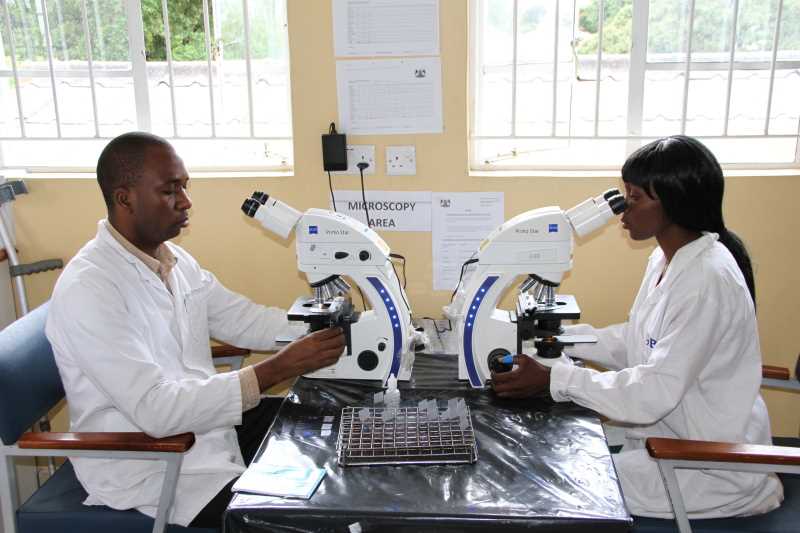
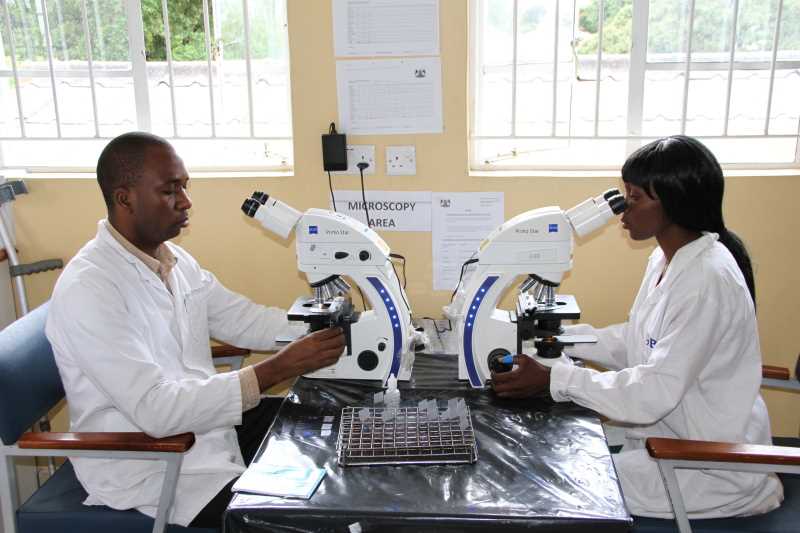
The City Health Department has two laboratories, one at Beatrice Road Infectious Diseases Hospital and the other at the Genito Urinary Centre (Wilkins), with the Beatrice Road laboratory being the main one. There are limited laboratory services at the polyclinics The laboratories offer diagnostic tests in haematology, serology, chemistry and microbiology with the major focus being on HIV, TB microscopy and antennal serological tests. The Beatrice Road laboratory is manned by ten scientists and three laboratory technicians . The laboratory is also assisted by ten microscopists who perform HIV, malaria and TB microscopy testing.
The Laboratory at Beatrice Road Infectious Diseases hospital is currently being expanded through Global Fund, Round Five, together with six other laboratories at the poly clinics with the primary objective being to capacitate TB diagnostic services. The city laboratories are satisfactorily manned by competent and motivated staff and have fairly modern equipment. There is however scope to improve the efficiencies of the processes and the goal is to achieve international certification.
Oral Health Services
The Division is located at Beatrice Road Infectious Disease Hospital (BRIDH) in Mbare and it is headed by Dr Ebenezar Ngwenyama.
Functions of The Division
- Increasing restorative Dentistry.
- Promoting preventive dental care.
The City currently has one fully functional dental clinic that is located at Beatrice Road Infectious Diseases Hospital. All the clinics were designed to incorporate a dental clinic as part of the comprehensive primary health care package. Some of the poly clinics like Mabvuku, Hatcliffe, Mufakose, Glen View, Kuwadzana and Rutsanana have dental clinics that are operating on and off depending on the availability of resources especially electricity and water. All the dental clinics at the poly clinics are currently adversely affected shortage of staff, obsolete equipment, shortage of equipment like handpieces, scalers, compressors, suction machines, and autoclaves.
Pharmaceutical Services
The Division is located at Beatrice Road Infectious Disease Hospital (BRIDH) and it is headed by Mrs Florence Chingwena.
Functions of The Division
- Ensuring availability of essential and vital drugs.
- Ensuring efficient and effective stock management systems, to eliminate the incidence of expired drugs on the clinic shelves.
The department has a central pharmacy that is located at Beatrice Road Infectious Diseases hospital and has the responsibility to purchase, supply and monitor the drugs and medical sundries for the department. Thanks largely to the support the department has been receiving from the International Committee of the Red Cross and the German government and the City of Munich, the city averaged 70% availability of essential drugs and over 90% of vital drugs in 2008 and 2009. The supply of sundry materials also improved.
While the department welcomes and appreciates the support it received from partners, this support will not be in perpertuity and the city needs to find a more sustainable funding arrangement. There is need to drastically improve our stock management systems. Firstly, there is need to computerise the central pharmacy at Beatrice Road Hospital. All the clinics and hospitals dispensaries need to be computerised and networked to the central pharmacy. There is need to continuously train all staff in stock management. The department also faces considerable challenges in terms of logistics. Currently the department uses the same pool vehicles used for linen, clinic waste and other logistics to ferry drugs and medical sundries. The pharmacy moves enough quantities of drugs and sundries to justify a lorry dedicated for that purpose.
Visual Location
Find us at Rowan Martin Building (RMB)