Harare Water Department
Headquartered at CABS CENTRE — Chegutu, Mashonaland West Province, Zimbabwe
Overview & Mandate
General operations and functions of Harare Water Department
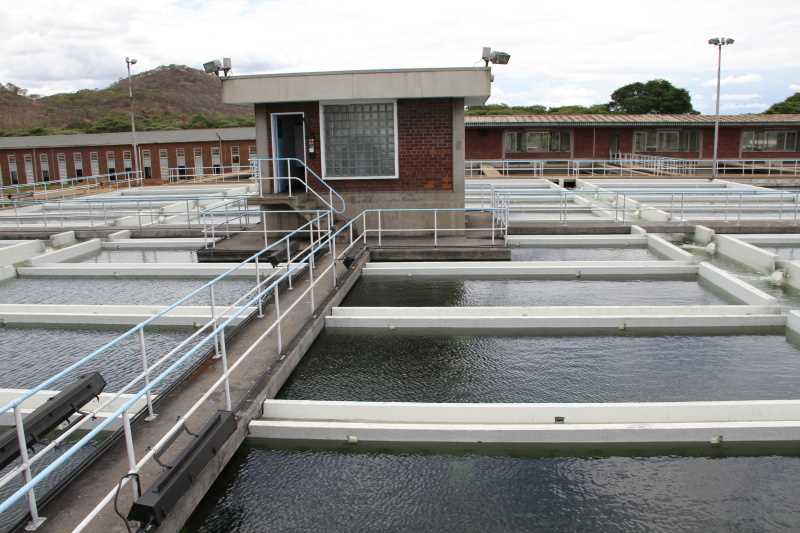
The Harare Water Department is located at Cabs Centre corner Sm Nunjoma and Jason Moyo. Engineer Kunyadini is the Acting Harare Water Director.
Vision
To be a world class provider of sustainable potable water and wastewater services.
Mission
To provide all consumers with affordable quality water and waste water services all the time.
Core Values
- Integrity
- Innovation
- Commitment
- Team Work
- Honesty
- Customer Satisfaction
Brief Overview
Harare Water is mandated to:
- Supply potable water to Harare and the surrounding local authorities of Chitungwiza, Epworth, Ruwa and Norton Town Councils with a combined estimated total population of about 4.5 million people.
- Provide sewerage services to Harare Municipality with an estimated total population of about 2.5 million people.
- In discharging this critical mandate, the City is experiencing greater than ever pressure to improve the quality and reliability of service provision against aged and inadequate infrastructure, ever depreciating raw water quality, poor revenue inflows, insignificant external support, and ever increasing arrears among many high level challenges.
Waste Water Management
Sewer Reticulation
City of Harare has a sewerage reticulation total of 6000km with sizes ranging from 100mm to 150mm house connections the smallest size in collector sewers up to 1350mm trunk sewers. There are 5 pump stations, 5 Sewerage treatment plants namely, Firle (144ML/day), Crowborough (54ML/day) Hatcliffe (2,5ML/day), Donnybrook (12ML/day), Marlborough(7,0ML/day).
Sewer Blockages
Blockages were reduced from an average of 50 blockages per suburb per day in 2008 when there was a cholera outbreak to the current less than 10 blockages per suburb per day. Reaction time has been reduced to less than 6 hours but target is less than 2 hours.
Sewerage Plants Rehabilitation
The city has embarked on sewer rehabilitation starting with reticulation system in 2009 with a total of more than 200km of sewer pipes replaced. The program must be continuous with an average of 50km pipe replacement every year for the system to cope with expansion and reduce collapse due to old age.
Sewage Treatment plants are being upgraded with capacity improved from 0Ml/day in 2008 to the current 72Ml/day.
Water Distribution
The Harare Water Distribution division is managed by the Distribution Manager, Engineer Kunyadini who is based at Old Mutual House. The water distribution division is one of the core divisions in Harare Water and is charged with the maintenance and operation of water transmission and distribution mains, distribution pump stations, storage reservoirs, service connections and water meters.
Key Result Areas of The Division
- Responsible for policies, strategies and activity formulation for the Division and advises the Director of Harare Water and Sanitation on Departmental Strategies.
- Responsible for the management of the water transmission, storage and distribution network, ensuring high behavioural and operative safety standards, optimization of manpower and equipment, ensuring timely completion of repairs, maintenance and replacement activities to minimize supply disruptions, adequate planning and budgeting for the activities.
- Responsible for Non Revenue Water (NRW) management, distribution network zoning and flow management, system pressure optimization, leakage control, equitable water distribution, metering and regular water audit reports.
- Responsible for all the water transmission, storage, distribution and customer supply network, ensuring optimal utilization and maintenance of all the assets through preventative maintenance programmes and administrative asset management frameworks that include asset registers and updating of drawings.
- Responsible for Customer supply projects such as connections and metering, ensuring timely responses to customer reports, identifying and communicating to customers affected by supply breakdowns, availing adequate information on water supplies to the customers.
Water Distribution Infrastructure
The Harare water supply infrastructure was originally designed to supply 350,000 people. The infrastructure was upgraded progressively with the last phase commissioned in 1994 to supply 1,500,000 people. There has not been any upgrading of the infrastructure since the last phase of Morton Jaffray.
On the other hand, the population (which includes Harare, Chitungwiza, Epworth, Ruwa and Norton Town Councils) which is the main driver of demand has been increasing and currently estimated at 4.5 million. The water supply infrastructure is now inadequate to supply the increasing demand. Some of the infrastructure in use is over 60 years, way beyond economic life. The economic life of most pumping plant is 15 years. Beyond this point, the operational efficiencies drop and breakdowns increase. The City is therefore having to deal with frequent breakdowns at the treatment works and this reduces the water output.
The distribution network is also aged with some of the pipework now over 60 years. Most of these pipes are the rigid asbestos cement pipes which break due to ground movements. The prevalence of burst pipes increases during the rainy season when soils expand and also just after the rains when the ground dries and begins to contract. There are also a lot of steel pipes laid in the City’s network. These are affected by corrosion and with age, they increase in leakage rates and burst frequencies. The distribution network status is contributing to the 60% non revenue water the City is currently recording.
The 890 km2 area of Harare is traversed by about 5,500 km of transmission and distribution mains with pipe diameters ranging from 50 mm to 1,500 mm. Pipe materials are mainly asbestos cement (AC) and steel. uPvc pipes were introduced into the system in the late 1990s.The distribution network also has 15 booster pump stations and 28 storage reservoirs with total capacity of 850,000 m3. There are approximately 192,000 consumer connections.
Modes of Water Supply
There are three water supply modes in Harare. The first is the pumping mode, where the areas are supplied off primary pumping mains. Some of the areas supplied in this mode are Highfield, Kuwadzana, Mbare and Sunningdale. Second, there is the gravity supply mode where areas are supplied from storage tanks by gravity. Some of the areas supplied by gravity are Budiriro, Glen Lorne, Glen View, Hatcliffe and Mabvuku. Storage reservoirs are located on high ground compared to the service areas to ensure full pressure supplies. The last category is supplied from both pumping and gravity. These are areas that can continue to access water after pumping failure such as the Central Business District (CBD). Various pressure zones were created in Harare but owing to system failures, most zone valves have been opened and this is exacerbating water losses.
Water Production
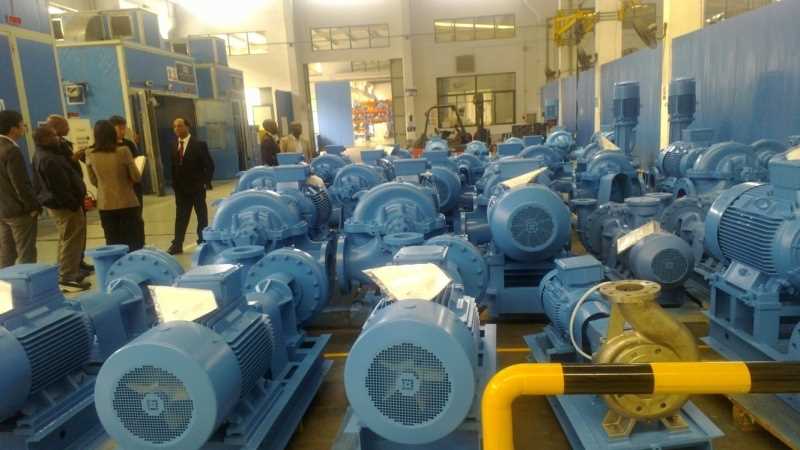
The main responsibilities of the Division involves planning, operations and general management of the City’s water production infrastructure at Morton Jaffray and Prince Edward Water Treatment Plants.
Planning
Planning involves checking the present and future water needs of the City.
Planning the infrastructure for raw water sources in conjunction with the Ministry of Water Resources, Management and Development, Ministry of Local Government, Urban and Rural Development and Ministry of Finance.
Operations
Operations involves extracting raw water from the lakes, purifying water in conjunction with Quality Assurance Division and pumping the treated water to the City‘s booster pump station at Warren Control, to the City’s storage reservoir at Lochnvar and Marimba and to the town of Norton. Inkomo Barracks and Sublime Township have off – takes from the Morton Jaffray Water Treatment Plant pumping mains to Warren Control and Lochnivar Reservoirs respectively.
Chitungwiza Municipal Council reservoirs are fed directly from Prince Edward Treatment Plant.
The treated water complies with World Health Organization (WHO) guidelines and the Quality Assurance Division monitors this compliance. In addition water samples are sent to independent laboratories as a further check on compliance.
Raw Water Quality
The Harare raw water quality has been depreciating over the years due to domestic, agricultural and industrial activities in Harare, Chitungwiza, Norton and Ruwa. Sewage works in these local authorities are dysfunctional resulting in raw sewage flows into the dams since they are located downstream of the settlements.
This has seen an increasing demand for chemicals to make the water potable. The City now uses 8 chemicals to effectively deal with the impurities and is incurring an expenditure of US$3 million per month. Besides the costs, there is also reduced productivity as filters at the works are frequently chocked and have to be backwashed. The current backwashing frequency is now every 8 hours resulting in water losses of 105 ML/day instead of backwashing once in 48 hours which would lose only 17.5 ML/day.
Raw Water Sources
Harare obtains raw water from four impoundments on the Manyame River. These are Harava and Seke Dams which supply Prince Edward (Seke) Treatment Works, and Chivero and Manyame Dams which supply Morton Jaffray (Manyame) Treatment Works.
Visual Location
Find us at CABS CENTRE